
Turning 40 does not make fitness harder overnight, but it does change the priorities. Recovery takes a little longer, old injuries speak up more often, and holding on to muscle starts to matter as much as losing fat. A fitness retreat that suits a 25-year-old athlete is not always the right fit for someone in their 40s, 50s, or beyond.
Here is what changes with age, what a retreat should do differently for adults over 40, and the questions worth asking before you book.
What Changes After 40
According to the National Institute on Aging, muscle mass and strength usually peak around ages 30 to 35. After that, muscle power and performance decline slowly at first and then faster later in life, after about 65 for women and 70 for men. The NIA describes age-related loss of muscle mass, strength, and function as sarcopenia and notes that some forms can affect middle-aged adults, not only older ones.
The encouraging part is in the same research: the NIA says that decline can be substantially slowed by staying active, and that many older adults can increase their strength with exercise. In other words, your 40s are a good time to start building muscle, not a reason to stop.
Daily life matters too. Many adults over 40 are balancing careers, children, and aging parents, and years of putting fitness last can leave stiff joints, tight hips, and a weak core. A good program accounts for that starting point instead of ignoring it.

What a Retreat Should Do Differently for Adults Over 40
Put strength training at the center
Cardio burns calories, but resistance training is what protects muscle. Look for a program that includes regular coached strength work, with weights or machines, at a level you can progress safely. If you have never lifted before, that is not a barrier. Good coaching starts with technique and lighter loads, then adds weight as your form and confidence improve.
Measure muscle, not just weight
When you are over 40, the scale can be misleading. Losing five pounds of muscle looks the same as losing five pounds of fat. Body composition testing shows which one is happening, so the plan can be adjusted if lean mass starts to drop.
Find your starting point before pushing hard
Testing cardiovascular fitness and checking posture and movement patterns before intense training helps coaches set the right intensity and spot imbalances that could turn into injuries.
Make recovery part of the plan
Mobility work, stretching, and rest are not extras after 40. A well-designed week mixes harder sessions with lower-intensity ones and gives your body time to adapt. Sleep and hydration count as part of training, too.
Scale everything
Two guests on the same schedule may need very different versions of the same workout. Coaches should be able to modify exercises for joint issues or past injuries without leaving you on the sidelines.
How Fitness Retreat Approaches Training After 40
At Fitness Retreat in Scottsdale, Arizona, every stay begins with four assessments. Hydrostatic body composition testing separates fat from lean mass, so muscle loss shows up in the results instead of hiding behind the scale. A VO2 Max test measures cardiovascular fitness and is used to set training intensity and heart rate zones. A resting metabolic rate test sets calorie targets, and a 3D body scan maps measurements, posture, and symmetry and flags imbalances.
Body composition is retested each week, which matters for anyone trying to lose fat while keeping muscle. Training mixes strength work, conditioning, mobility, and hiking, and the coaching team adjusts intensity to each guest. The program's coaching philosophy describes pushing guests to work hard while keeping them within their limits.
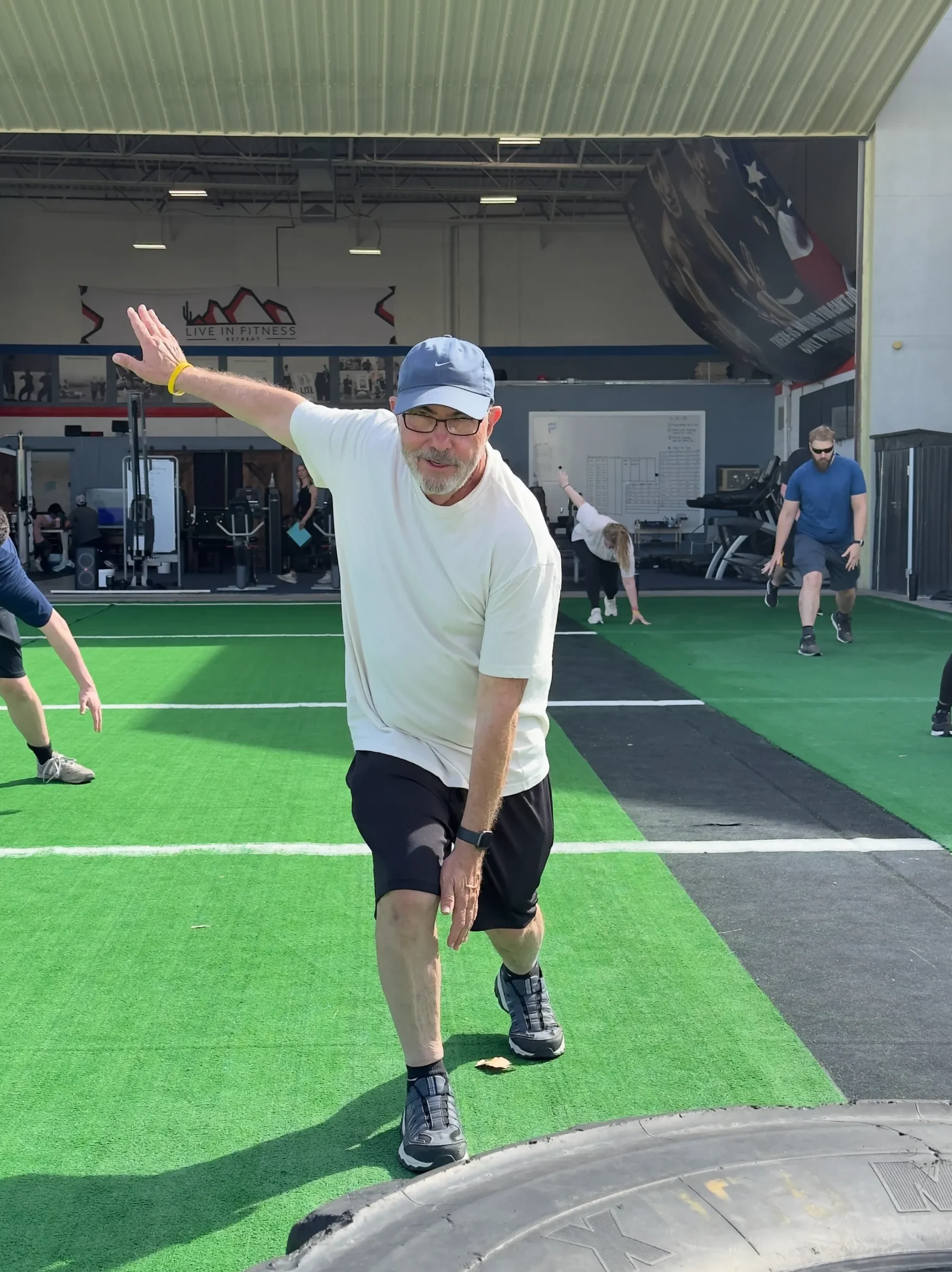
For extra recovery support, the pricing page lists optional add-ons including 25-minute private stretching sessions, 25-minute personal training sessions, and 50- or 75-minute massages. Coaches may recommend them based on your health and goals, but the page is clear that they are never required.
Women over 40 who are also navigating perimenopause or menopause may want to read our guide to the best weight loss program for menopause, which covers those changes in more detail.
Five Questions for Any Retreat
How much of the week is strength training? Look for regular coached sessions, not just cardio and classes.
How will you know if I am losing muscle? The answer should involve body composition testing, ideally more than once.
How are workouts modified? Ask how coaches handle bad knees, back issues, or past injuries.
What does recovery look like? Ask about mobility work, stretching, and how hard and easy days are balanced.
What happens after I leave? A routine you can keep at home matters more than one great week.
If you have a heart condition, joint problems, or other health concerns, or if you have been inactive for a long time, talk with your doctor before starting an intensive program.
Starting Now
The best fitness retreat for people over 40 treats muscle as something to protect, measures progress with more than a scale, finds your limits before testing them, and builds recovery into the week. Age changes the approach, not the possibility of results.
If you are over 40 and ready to rebuild strength, book a consultation with Fitness Retreat and bring your questions about past injuries, current fitness, and how the training would be adjusted for you.
This article shares general information and does not replace advice from your own doctor.