GLP-1 medications can be an important part of a medically supervised weight-loss plan, but they do not replace the need for nutrition, exercise, and healthy routines.
For people taking a GLP-1 medication, the best weight loss program is one that works alongside medical care and pays attention to more than the number on the scale. Strength training, adequate nutrition, body composition, cardiovascular fitness, and long-term habits all deserve a place in the plan.
This becomes especially important when weight is coming off quickly or appetite is significantly reduced. Research on incretin-based medications has found that some lean mass can be lost along with body fat during weight reduction, which makes strength training and appropriate nutrition worth considering as part of a broader strategy.
Any decision to start, stop, or change a GLP-1 medication should remain between the individual and their prescribing healthcare professional.
Look Beyond Scale Weight
Watching the scale move can be encouraging, but body weight alone does not show what is changing.
Weight loss can include reductions in fat mass as well as lean tissue. That does not mean GLP-1 medications uniquely cause muscle loss. Lean mass can decline during substantial weight loss from a variety of approaches. A 2026 meta-analysis found that the proportion of lean mass lost with incretin therapy was broadly comparable with lifestyle-based weight-loss interventions, while programs that incorporated resistance training showed better lean-mass preservation.
This is why a useful program should track progress in more than one way.
Body composition measurements, strength, cardiovascular fitness, mobility, and how someone feels during training can provide additional context alongside body weight.
Make Strength Training Part of the Plan
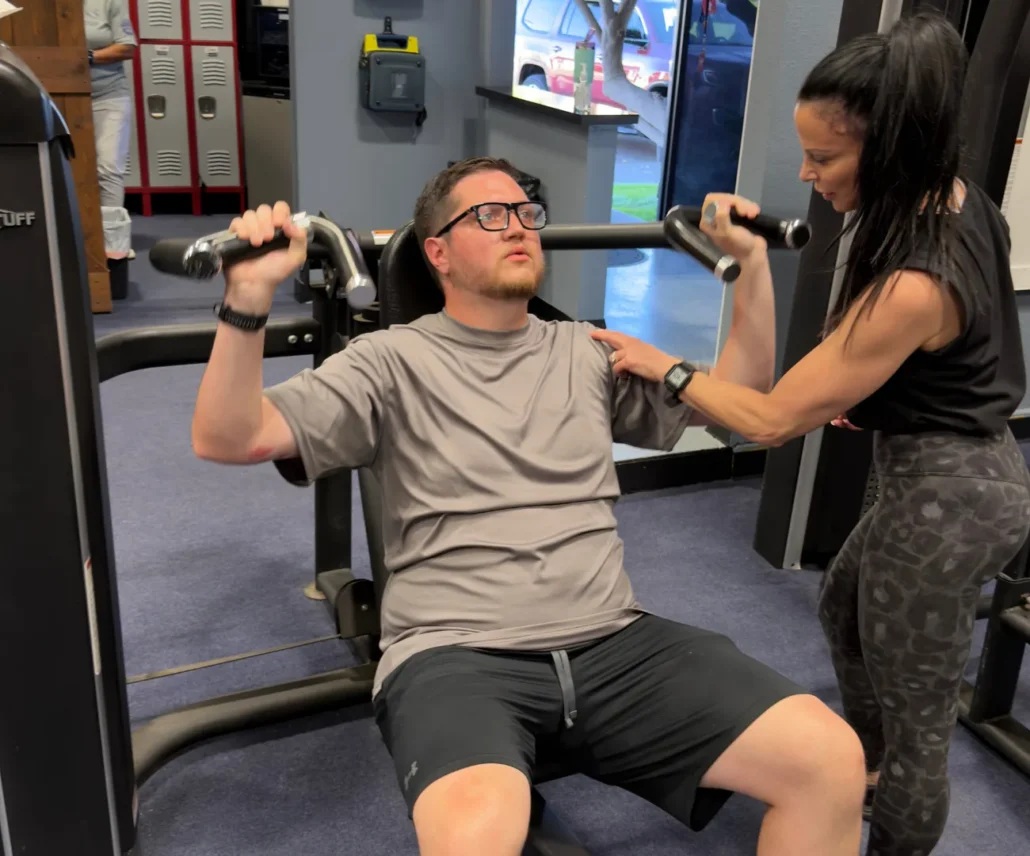
Resistance training is one of the most important pieces of a well-rounded program during weight loss.
The goal is not necessarily to train like an athlete or spend hours lifting weights. It is to provide the muscles with a regular reason to keep working and getting stronger.
Current nutrition and obesity guidance recommends combining resistance exercise with appropriate nutrition as part of an effort to maintain lean mass during weight reduction. Aerobic activity remains valuable for cardiovascular health, but resistance training plays a particularly important role when muscle preservation is a priority.
A good program should also meet someone where they are. A person who is new to exercise may need a very different starting point from someone who already strength trains several times per week.
Progression should reflect current strength, mobility, energy levels, and exercise experience.

Nutrition Still Matters When Appetite Changes
GLP-1 medications commonly reduce appetite, which can make eating less feel much easier. It can also make it more challenging for some people to consume enough protein and other essential nutrients.
That makes food quality more important, not less.
Protein is particularly relevant during weight loss because it supports muscle tissue, especially when combined with resistance training. However, there is no single protein target that is appropriate for every GLP-1 user. Age, health status, kidney function, body size, activity, and other factors can influence individual needs.
Rather than forcing large meals when appetite is low, a nutrition plan may need to prioritize nutrient-dense foods and manageable portions.
It should also remain flexible. Some people experience gastrointestinal side effects or changes in food preferences while taking these medications, so a plan that looks good on paper still needs to be practical for the person following it.
Why Body Composition Testing Can Be Useful
Someone can lose weight without knowing how much of that change came from fat mass, lean tissue, or shifts in body water.
Body composition testing adds another point of reference.
Fitness Retreat in Scottsdale, Arizona, uses hydrostatic body composition testing as part of its assessment process. The program also lists RMR testing, VO2 Max testing, 3D Fit technology, and posture analysis among its evaluations.
These assessments can help establish a baseline before the program begins.
For a guest taking a GLP-1 medication, repeated body composition measurements may also help the team see whether lean mass is changing over time and use that information when evaluating the fitness and nutrition program.
Testing should be viewed as a tool for guiding decisions, not as a promise that weight loss will consist only of body fat.
Real Guest Results: What the Scale Missed
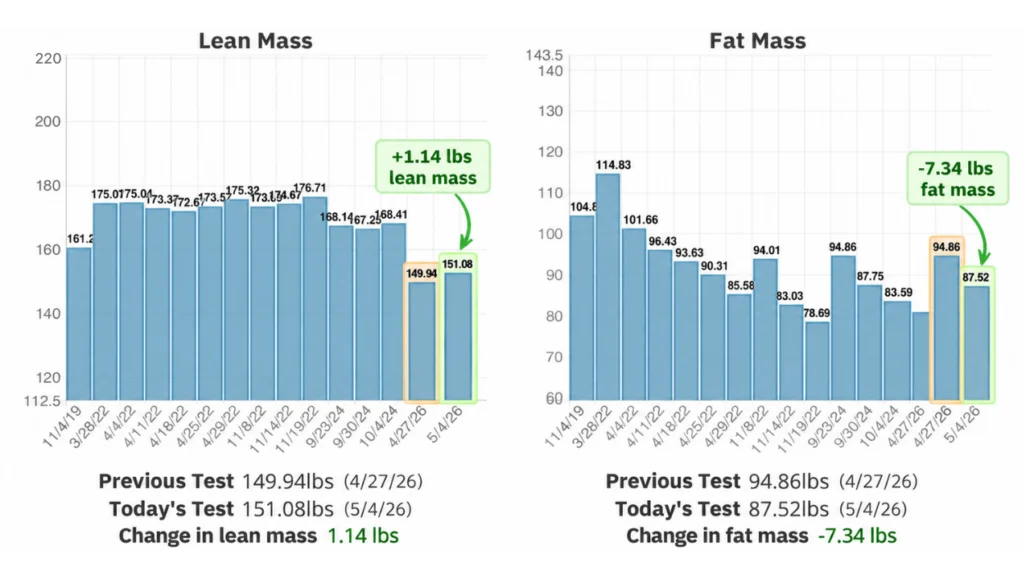
Lance had previously attended Fitness Retreat, then later used GLP-1 medication on his own. When he returned in April 2026, the scale made it look like he had made progress: he weighed 7.2 pounds less than at his last test in October 2024. But hydrostatic testing told a very different story.
He had 18.5 pounds less lean mass, 11.3 pounds more body fat, and his body-fat percentage had increased from 33.17% to 38.75%. In other words, he was lighter on the scale, but his body composition had moved in the wrong direction.
After Lance came back to Fitness Retreat and was no longer using the GLP-1 medication, that pattern changed. From April 27 to May 9, 2026, his hydrostatic tests showed 12.84 pounds less body fat, 2.44 pounds more lean mass, and 10.4 pounds less total weight.
With structured strength training, nutrition, and repeated body-composition testing, the focus shifted from simply losing weight to losing fat while rebuilding and preserving lean mass. Lance’s experience is a clear example of why the number on the scale is only part of the story, and why protecting lean mass matters during significant weight loss.
How Fitness Retreat Supports People Taking GLP-1 Medications
Fitness Retreat does not prescribe GLP-1 medications or replace the clinician managing them.
Its role is different.
The residential program focuses on the fitness, nutrition, body composition, and behavioral pieces that can sit alongside a person’s medical treatment.
Fitness Retreat currently identifies GLP-1 users as one of the groups addressed through its Metabolic Mastery Method. Its program uses hydrostatic testing to monitor body composition and states that protein intake and resistance training can be adjusted based on those results.
The broader retreat includes:
- RMR testing
- VO2 Max testing
- Hydrostatic body composition testing
- 3D body scanning
- Personalized meal planning
- Coached strength and cardiovascular exercise
- Progress assessments
- Housing and meals
- Education and accountability
Fitness Retreat says its programs are built using testing results, current fitness level, and individual goals rather than placing every guest on an identical plan.
For someone already losing weight with a GLP-1 medication, that creates an opportunity to focus on strength, fitness, nutrition, and body composition while the medication itself remains under the direction of the prescribing provider.
A Residential Setting Can Make the Routine Easier to Practice
One advantage of a live-in program is that exercise and nutrition do not have to compete with the usual daily schedule.
At Fitness Retreat, workouts, meals, assessments, education, and accommodations are incorporated into the stay. That gives guests dedicated time to practice routines that might otherwise be difficult to establish around work, family responsibilities, travel, and other obligations.
For a GLP-1 user, that time can be used to learn how to structure meals when appetite is lower, establish a repeatable strength-training routine, and understand how different forms of exercise fit together.
The goal is not simply to create an intense week or two. It is to leave with a clearer sense of what a sustainable routine can look like at home.
The Plan Needs to Continue After the Retreat
Medication can influence appetite, but it does not automatically build an exercise routine, plan meals, or create long-term consistency.
Those habits still have to work in everyday life.
Fitness Retreat connects its residential program with Fit Culture, which offers customized workout plans, meal planning, recipes, macro tracking, coaching resources, and accountability tools through its app.
That aftercare can help bridge the gap between a highly structured retreat and normal life at home.
It can also give someone a framework to continue exercising and paying attention to nutrition while their medication plan remains under the supervision of their healthcare provider.
Choosing the Right Support While Taking a GLP-1
There is no single weight loss program that is best for every person taking a GLP-1 medication.
A useful program should complement medical treatment rather than compete with it. It should also recognize that successful weight management involves more than appetite control.
For many people, that means combining medical care with adequate nutrition, progressive strength training, cardiovascular activity, body composition monitoring, and habits that can continue beyond the period of active weight loss.
Fitness Retreat offers that type of structured environment through individualized testing, personalized nutrition, coached exercise, residential support, and continued resources through Fit Culture.
If you are taking a GLP-1 medication and want dedicated support for the fitness and nutrition side of your weight-loss plan, explore Fitness Retreat and speak with the team about your current goals, fitness level, and whether the residential program is a good fit alongside your medical care.